Chore Chart for a 2 Year Old (What's Realistic + Free Printable)
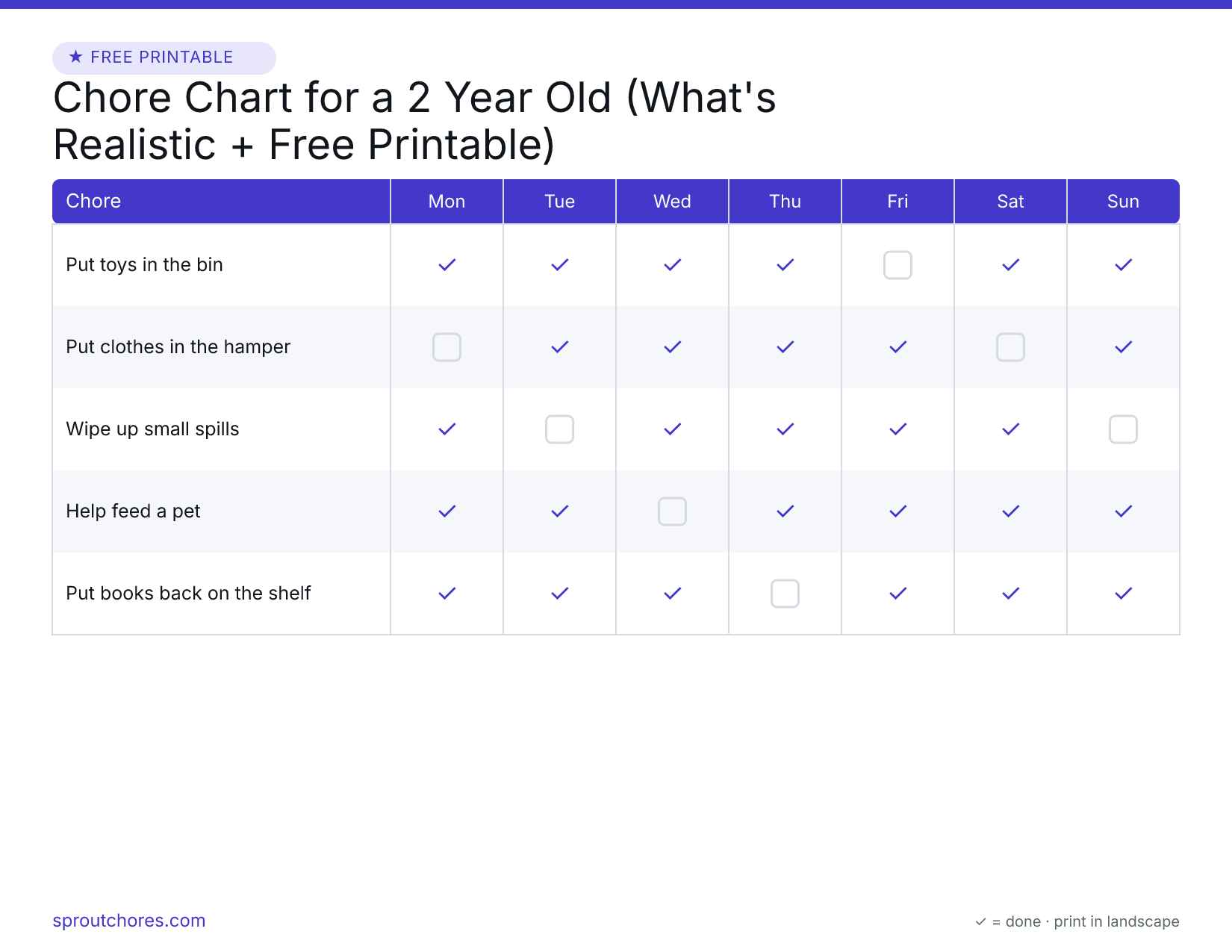
If you searched for a chore chart for a 2 year old, let me set your expectations before you print anything: at two, this is not really about chores. A toddler isn't going to clean a room or finish a job the way you would, and any chart that promises otherwise is setting you both up to feel like failures. What a two-year-old can do is start to notice that they're part of how the house runs, and a tiny picture chart gives them a way to see that. The list above is built deliberately short, with images instead of words, because a child this age can't read and shouldn't be handed more than a couple of things to recognize. I'm Andrew. My wife and I are raising four kids, now between 9 and 18, and we've also fostered three children who were right around this age when they landed with us. So I've watched what a two-year-old can and can't carry more than a few times over. The honest version below is simple: aim for a child who starts to feel like a small helper, not a worker, and treat the chart as something you use to keep an eye on things rather than a scoreboard you wave at your toddler. Print it as it is or trim it down even further, then read on for what age two can genuinely manage.
| Chore | Mon | Tue | Wed | Thu | Fri | Sat | Sun | Remove |
|---|---|---|---|---|---|---|---|---|
| Put toys in the bin | ||||||||
| Put clothes in the hamper | ||||||||
| Wipe up small spills | ||||||||
| Help feed a pet | ||||||||
| Put books back on the shelf |
Tip: choose Landscape in the print dialog for the best fit.
Print in landscape for the best fit. A few reminders from our family to yours: do it together the first few times, keep the chart somewhere everyone can see it, and reward steady effort over a perfect job. — The SproutChores family
Want every age in one file? Get the free Age-by-Age Pack
Six printable charts (ages 4–10) plus reward and routine sheets, in one tidy PDF — free, straight to your inbox.
We email you new printables now and then — unsubscribe anytime. Privacy.
Something went wrong — please try again in a moment.
✓ Almost there — check your inbox!
We just emailed you a confirmation link. Click it to confirm, and your free Age-by-Age Chore Chart Pack lands in your inbox moments later.
Age-appropriate chores for a 2 Year Old
Every chore below is pre-loaded in the generator above and is something a child in this age range can realistically manage with a little initial guidance:
- Put toys in the bin
- Put clothes in the hamper
- Wipe up small spills
- Help feed a pet
- Put books back on the shelf
What a 2-Year-Old Can Realistically Handle
Here's the reassurance I wish someone had handed us early on: at two, almost nothing on a chart is about the result. It's about the trying. A toddler can have a go at pulling on a sock, drop a dirty shirt in the general direction of the hamper, and push a few stray toys back toward a basket. They will do all of it badly, slowly, and only some of the time, and that is completely on track. If you measure age two by whether the job got done, you'll quit by Thursday. Measure it by whether your child reached for the task at all.
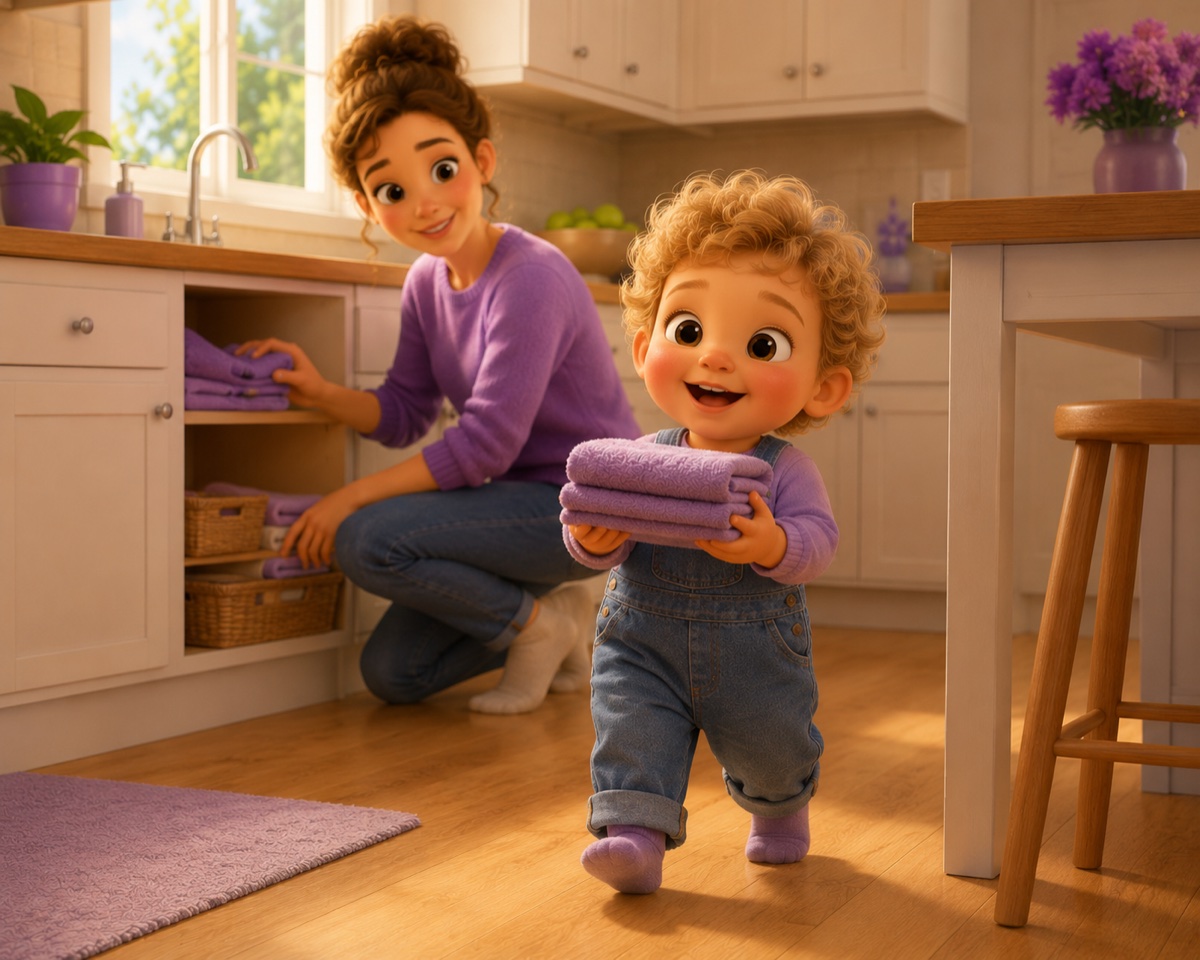
The reason this works is that toddlers are copycats. A two-year-old wants to be doing whatever the big people are doing, so the easiest way to teach almost anything is to let them shadow you while you do the grown-up version. I'd fold a towel and slide one over for small hands to crumple. If our youngest grabbed for the broom because I had one, they got a turn, and I'd show them exactly one piece of it instead of the whole routine. Keep these attempts brief, just a quick willing go before their interest moves on, and resist the urge to coach every detail. What you're really banking is familiarity. The task that feels normal and old-hat at two is the one that won't feel like a foreign imposition when it becomes a genuine expectation at five or six. So frame everything on a two-year-old's chart as helping, not as chores they owe you. The pressure of owing comes much later. Right now you just want a child who likes being in the mix.
How to Make a Toddler Chart Actually Stick
The biggest mistake I see parents make at every age, and it bites hardest with toddlers, is building one beautiful, ambitious system and then watching it collapse the first time real life shows up. A cold, a trip to grandma's, a week where dinner runs late, and suddenly the chart's been blank for nine days and you've quietly decided the whole idea doesn't work. It wasn't the idea. The system just wasn't built to survive an ordinary disrupted week. With a two-year-old especially, design for the restart, not the streak. Pick one or two things, expect the chart to go dark sometimes, and make picking it back up after a bad stretch feel like nothing at all.
A second thing that quietly defused a mountain of toddler resistance for us was giving warning before a transition. Springing a task on a two-year-old in the moment tends to trigger a meltdown, because they're deep in whatever they're doing and you've yanked them out of it with no runway. A gentle heads-up that something's coming soon, then the actual ask a few minutes later, gives a little brain time to land. It feels almost too small to matter, and it solved more standoffs in our house than any reward ever did.
If you want proof that predictability beats novelty at this age, our fostering years made it impossible to ignore. The young children who came to us tended to arrive without much rhythm to their days, and the single most stabilizing thing we could offer was the same sequence of events happening in the same way every day. Once they could anticipate what came next, a lot of what looked like defiance simply dissolved. It turned out to be uncertainty wearing the mask of bad behavior. A two-year-old in a settled home is running on that same fuel, even if the stakes look smaller from where you stand. A chart they can recognize and a day they can predict is doing far more underneath than any sticker on the surface.
Rewards, Money, and Why None of It Belongs Here Yet
This is where I step away from most chore-chart advice, so I'll just say it plainly. The chart is a tool for you, the parent, not a motivation gadget aimed at your kid. Its real job is to let you glance over and read how a child is settling in, so you notice when something needs a nudge. At two there is no allowance, nothing paid out per task, and I'd steer you away from turning the chart into a sticker bribe, however tempting. The minute helping only counts when a prize is dangling, you've signed up for a much harder negotiation every year for the next decade and a half. The pull to participate should grow out of one quiet, repeated truth, that this is a family and everyone in it pitches in, not out of a payout waiting at the end of a row.
For the record, money doesn't enter our world until kids are contributing in a real way, somewhere around five or six, and even then it's a small weekly amount that rides on how well and how reliably the work happens and the attitude behind it, never priced out chore by chore like a vending machine. We also keep screen time entirely out of the chore conversation. We never made a child earn their shows by finishing a job; losing screen time was only ever a consequence for genuine misbehavior, not something you buy back with a tidy floor. The other thing worth holding onto with a two-year-old is patience, because progress at this age is nearly invisible day to day. You won't see it on a Tuesday or even across a month. But it accumulates. Our nine-year-old now gathers every bag of trash in the house on his own, unprompted, start to finish. That didn't appear one morning. It was built out of years of small, ordinary consistency that started with a toddler being allowed to help and not being paid to do it.
Frequently asked questions
- What chores should a 2 year old do?
- Keep it to one or two simple, self-focused things, framed as helping rather than real chores: having a go at getting dressed, dropping dirty clothes toward the hamper, and putting their own toys back in a basket. They can also "help" with bigger jobs like sweeping or wiping for a minute or two, purely for the practice. Don't expect any of it to be done well or even every time. At two you're building comfort and the habit of pitching in, not getting a clean house, so judge it by whether your toddler reaches for the task at all, not by the result.
- Is a 2 year old too young for a chore chart?
- No, as long as you treat it the right way. A chart for a two-year-old isn't there to make them work; it's a short, picture-based map of a couple of familiar tasks, and just as much it's a way for you to keep an eye on how your child is doing. Use it as a parent's tracking tool, not a performance scoreboard you hold over a toddler. Keep it to one or two icons, expect it to go untouched on plenty of days, and make restarting after a busy week feel effortless. Framed that way, age two is a fine time to begin.
- Should I reward or pay a 2 year old for chores?
- We don't, and I'd suggest you hold off too. There's no allowance at two in our house, and I'd be cautious about turning the chart into a sticker bribe, because once helping only counts when there's a prize, you've made every future year harder. Money doesn't start for us until around five or six, and even then it's tied to doing the work well and consistently with a good attitude, never paid out task by task. We also keep screen time completely separate from chores. The motivation at this age should come from simply being part of a family where everyone helps.
- How do I get my 2 year old to actually do their chores?
- Lean on three things that worked for us. First, let them copy you. Toddlers want to do whatever you're doing, so teach a task by doing your version right beside their tiny one. Second, give a little warning before a transition instead of springing a task on them mid-play, which heads off a lot of meltdowns. Third, build a predictable daily rhythm so the same things happen in the same order each day; that steadiness does more than any reward. And expect slow, invisible progress. At two you're planting habits, not collecting finished work.

About the author
More free printables
Get the free Age-by-Age Chore Chart Pack
Six printable charts (ages 4–10) plus reward and routine sheets, in one tidy PDF. We'll also send new printables and the occasional real parenting tip. The charts on this site are always free — no sign-up needed.
We email you new printables now and then — unsubscribe anytime. Privacy.
Something went wrong — please try again in a moment.
✓ Almost there — check your inbox!
We just emailed you a confirmation link. Click it to confirm, and your free Age-by-Age Chore Chart Pack lands in your inbox moments later.