Potty Training Chart (Free Printable Sticker Reward Chart for Toddlers)
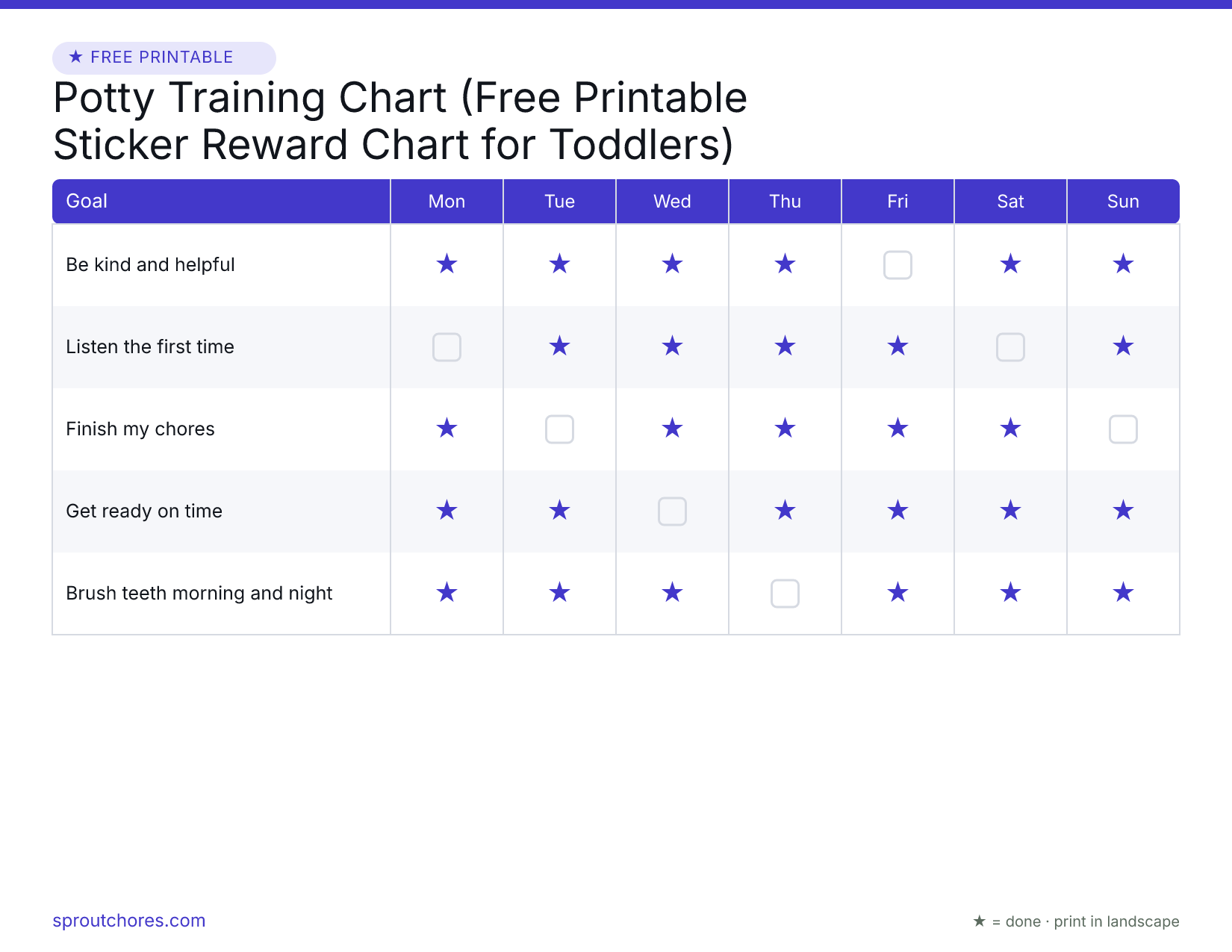
A potty training chart is about as simple as a chart gets: a little grid where every trip to the toilet that goes right earns one sticker, and the page slowly fills up as your toddler gets the hang of it. The generator on this page builds exactly that, and you can set it up in under a minute. Pick a boy, girl, or neutral theme, print it for the bathroom wall or the fridge, and let your two- to four-year-old press a sticker on each time they make it. Before you print, I want to be honest with you about what this little grid does and doesn't do, because I think most of the advice out there oversells it. I'm Andrew, dad to four kids now aged 9 to 18, and my wife and I have fostered toddlers too, so we've stuck a lot of stickers on a lot of charts. Here's the plain truth from our years of it: the stickers don't really teach a child to use the potty. Their body and their readiness do that. What the chart mostly does is give you, the parent, a clear week-at-a-glance picture of how it's going, where the wins are and where the snags keep landing. As a short, cheerful little nudge while a brand-new skill is taking root, it earns its spot on the wall. As a long-term payment scheme, it tends to wobble. Build yours below, then read on for how we'd use it so it helps the process instead of getting in the way.
| Goal | Mon | Tue | Wed | Thu | Fri | Sat | Sun | Remove |
|---|---|---|---|---|---|---|---|---|
| Be kind and helpful | ||||||||
| Listen the first time | ||||||||
| Finish my chores | ||||||||
| Get ready on time | ||||||||
| Brush teeth morning and night |
Tip: choose Landscape in the print dialog for the best fit.
Print in landscape for the best fit. A few reminders from our family to yours: do it together the first few times, keep the chart somewhere everyone can see it, and reward steady effort over a perfect job. — The SproutChores family
Want every age in one file? Get the free Age-by-Age Pack
Six printable charts (ages 4–10) plus reward and routine sheets, in one tidy PDF — free, straight to your inbox.
We email you new printables now and then — unsubscribe anytime. Privacy.
Something went wrong — please try again in a moment.
✓ Almost there — check your inbox!
We just emailed you a confirmation link. Click it to confirm, and your free Age-by-Age Chore Chart Pack lands in your inbox moments later.
How to use a potty training chart (and what it's really for)
Tape the chart right where the action happens, low enough that your toddler can see it and reach it without you lifting them. At this age, out of sight really is out of mind, so a chart living on the bathroom wall at knee height does far more than a tidy one filed away somewhere. The other thing that matters most is timing: hand over the sticker the instant the trip goes well, while the success is still warm. A toddler can't connect a reward to something that happened three hours ago, so the sticker has to land in the moment or it's just decoration. Now the part I'd ask you to sit with. In our house the chart was never the thing that did the teaching; it was the thing that let us read the week. A glance told us whether the morning trips were clicking but the after-nap ones kept getting missed, or whether a particular day kept going sideways, which is genuinely useful information for a parent steering the process. So treat your potty chart first as your own tracking page and only second as a little bit of fun for your child. I'd also draw a firm line between the chart and the things that run on their own rules in our home. We never tied screen time to the potty, and we never used the chart as a punishment, peeling a sticker back off after an accident. A chart that can lose ground starts to feel like a scorecard your toddler is failing, and at this age an accident isn't defiance anyway, it's just a body that's still learning. Let the chart only ever go forward, celebrate the trips that work, and meet the misses with a shrug and a fresh start. One more honest note: not every toddler even cares about the chart. We've raised one kid who adored a sticker grid and would march us to the bathroom to claim her square, and another who barely registered it existed. If yours falls in the second camp, that's completely fine, lean on the steady routine and your encouragement instead of forcing the chart to be something it isn't for that child.
Choosing potty rewards that help instead of hook
With toddlers, the reward almost matters less than your face when you give it. A genuinely delighted parent, a little clap, a 'you did it!' is often more powerful than any object, and it costs nothing and never inflates. So before you reach for prizes, lean hard on plain warmth, because that's the reward your two-year-old is really chasing. When you do want something tangible, smaller and more frequent beats big and rare every time. A sticker your toddler gets to choose and press on themselves is usually plenty; the choosing and the pressing is half the fun. If you want a step up for a good run, keep it in the spirit of the dollar-store treasure boxes we used with our younger kids over the years, little trinkets cheap enough that we never had to ration them or turn handing one over into a negotiation. The moment a potty reward gets expensive or rare, you've accidentally raised the stakes high enough for a toddler to bargain over, and you've taught them that the toilet comes with a price tag. A few things I'd steer you toward. Reach for experiences and connection over a pile of stuff, an extra story at bedtime or a few minutes of a favorite game with you lands better than another plastic toy. Keep the reward in proportion to a toddler's tiny world, which is smaller than you think. And hold this whole sticker-and-treasure idea apart from everyday family life. Using the potty is your child growing up, not a job they're being paid for, the same way nobody in our house gets a prize for brushing their own teeth or putting their own clothes on. The chart can sprinkle a little extra delight on a new skill while it's forming. It just shouldn't become the reason your child does it, because that reason needs to end up being theirs.
When it stalls: comfort and routine beat pressure
Almost every toddler hits a patch where the chart goes quiet, a string of accidents, a flat refusal to sit, a kid who was nailing it suddenly acting like they've never seen a potty. The instinct is to push harder or wave the stickers around more enthusiastically, and I'd gently steer you the other way. A toddler who's anxious or overwhelmed cannot learn in that moment; a stressed little body isn't really listening, no matter how reasonable you're being. We saw this most clearly while fostering young children who'd come from homes with almost no predictable rhythm. The thing that settled them was never a reward, it was knowing what came next. Once a steady, repeated daily routine took hold, the resistance we'd been reading as stubbornness mostly melted, because a lot of what looks like a toddler digging in is really a toddler who feels unsure. The same lesson carries straight into potty training. Build the trips into a dependable rhythm, the same handful of natural moments each day, so your child isn't being sprung on but is simply doing the next familiar thing. A small heads-up does real work here too: telling a toddler 'after this, we're going to try the potty' gives their brain a second to catch up, which heads off a surprising number of standoffs. And keep the visits short and low-pressure; a brief, calm try with no big show if nothing happens beats a tense ten-minute sit that turns the bathroom into a place they'd rather avoid. The other thing to make peace with is that a rough stretch is not the system failing. The plans that survive in real homes aren't the flawless ones, they're the ones you can dust off and restart in five minutes after a vacation, an illness, or a chaotic week knocks them over. If the chart falls off the wall for a bit, pick it back up without ceremony when life settles. Progress at this age is almost invisible day to day; you only really see it looking back over weeks, and steady beats dramatic every single time.
When to retire the potty chart
A potty chart is scaffolding, meant to come down once the skill underneath can hold itself up. The signal is usually a happy and very ordinary one: your child just goes when they need to, and nobody, including them, is thinking about the chart anymore. When the toilet has stopped being an event and become a non-event, the chart has done its job. You don't need a big announcement or a final-sticker ceremony. We tend to just let the stickers taper off as a skill gets reliable, mentioning them less and less until the chart quietly stops being the point. Wean the rewards before you take the chart down entirely, so the new habit gets a chance to stand on its own legs before the tracking disappears too. A couple of cautions from real life. Don't snatch it away after one dry week, give the skill time to truly set, since toddlers backslide easily when they're tired, sick, or distracted. And don't read a regression as a verdict on the whole effort; it's just part of how little kids learn anything. The deeper reason I'd let the chart fade rather than lean on it forever is the same thread that runs through everything we do as parents. Lasting motivation never came from a sticker in our experience, it came from a child feeling capable and feeling like a growing part of the family. A potty chart can carry a brand-new skill through its shaky first weeks, which is genuinely worth something. But the thing that makes 'I can use the toilet myself' stick is your child's own pride in being a little more grown-up, and once that's landed, the chart has worked itself out of a job, which was the whole idea.
Frequently asked questions
- Do potty training reward charts actually work?
- They can help, but probably not the way the packaging suggests. In our experience the stickers themselves don't teach a child to use the toilet, their body and their readiness do that, and a chart can't speed up a kid who isn't there yet. What a potty chart does well is give a brand-new skill a little extra cheer while it's forming, and give you a clear week-at-a-glance picture of where the wins and the snags are landing. Used as a short, upbeat nudge rather than a payment plan, it earns its place on the wall. Just know that some toddlers light up at a sticker grid and others barely notice it, and both are completely normal, so lean on routine and warm encouragement either way.
- What's a good reward for a potty training chart?
- Smaller and more frequent beats big and rare with toddlers, and your genuine delight is often the strongest reward of all. A sticker the child gets to choose and press on themselves is usually plenty, since the choosing and pressing is half the fun. If you want a step up for a good run, keep it in the spirit of a dollar-store treasure box, little trinkets cheap enough that you never have to ration them or argue over them. Lean toward experiences and time with you, an extra bedtime story or a few minutes of a favorite game, over a pile of plastic. And keep the reward in proportion to a toddler's small world, because the moment a potty prize gets expensive you've handed them something to bargain over.
- Should I give a sticker for every potty trip?
- In the early days, yes, a sticker for each successful trip gives the new skill a clear, immediate bit of fun while it's taking root, and the sticker needs to land in the moment for a toddler to connect it to what they just did. But hand it out only for the wins and never take one back after an accident; a chart that can lose ground starts to feel like a scorecard your child is failing, and at this age a miss isn't defiance, it's just a body still learning. As the trips become reliable, ease off the stickers on purpose rather than rewarding forever, so your child's own pride in growing up becomes the reason they go, not the prize.
- How long should you use a potty training chart?
- Only as long as it's helping, which is usually a few weeks to a couple of months while the skill is shaky and new. Start phasing it out once your child just goes when they need to and nobody, including them, is thinking about the chart anymore, that fading interest usually means the habit has stuck. Wean the rewards before you retire the whole chart, and don't pull it after a single dry week, since toddlers backslide easily when tired or sick. If a rough patch or a busy stretch knocks the chart off the wall, that's not failure; just dust it off and restart, because the best systems are simply easy to pick back up.

About the author
More free printables
Get the free Age-by-Age Chore Chart Pack
Six printable charts (ages 4–10) plus reward and routine sheets, in one tidy PDF. We'll also send new printables and the occasional real parenting tip. The charts on this site are always free — no sign-up needed.
We email you new printables now and then — unsubscribe anytime. Privacy.
Something went wrong — please try again in a moment.
✓ Almost there — check your inbox!
We just emailed you a confirmation link. Click it to confirm, and your free Age-by-Age Chore Chart Pack lands in your inbox moments later.